📞  — free, 24/7
— free, 24/7 — free, 24/7| Package | Price per Dose | Price | |
|---|---|---|---|
| 180 pills | £1.85 | £474.30 £332.01 Free shipping | |
| 120 pills | £1.97 | £337.94 £236.56 Free shipping | |
| 90 pills | £2.08 | £266.79 £186.75 Free shipping | |
| 60 pills | £2.31 | £198.61 £139.02 | |
| 30 pills | £3.11 | £133.39 £93.37 | |
| 180 pills | £2.08 | £533.59 £373.52 Free shipping | |
| 120 pills | £2.23 | £382.41 £267.68 Free shipping | |
| 90 pills | £2.51 | £323.12 £226.18 Free shipping | |
| 60 pills | £2.80 | £240.11 £168.08 Free shipping | |
| 30 pills | £3.32 | £142.28 £99.60 |
Disclaimer: This information is for adults in the United Kingdom. It is not a substitute for professional medical advice.
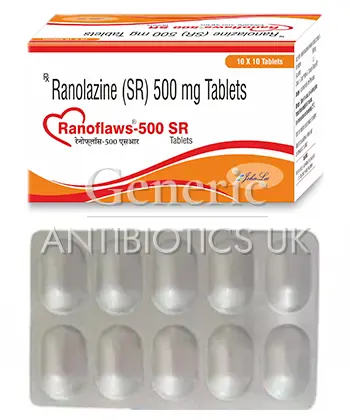
Ranexa is an anti-anginal medicine that treats angina.
It belongs to a class of heart medicines that improve blood flow and reduce chest pain during activity or exertion.
Your doctor may prescribe it for ongoing angina management when other treatments have not fully helped.
You take Ranexa as tablets, usually twice daily, unless your clinician guides you differently.
The medicine works by affecting how the heart uses energy, which can help it tolerate stress better.
It is intended to lessen the frequency and severity of chest pain when you exercise or move about.
You should not take Ranexa if you have certain medical conditions or if the medicine could interact badly with other drugs you take.
In particular, tell your clinician if you have severe liver problems, a history of abnormal heart rhythms, or significant kidney issues.
It may not be suitable during pregnancy or while breastfeeding unless a clinician approves it after weighing risks and benefits.
Do not stop or change your treatment without talking to your healthcare professional first.
Monitor for symptoms that could indicate a heart rhythm change, such as fainting, confusion, or unusually slow heartbeat.
If you notice persistent dizziness, chest pain that worsens, or swelling in ankles or hands, seek medical help promptly.
Common effects may include nausea or feeling dizzy on standing up quickly.
If you have ongoing stomach upset, discuss it with your pharmacist or clinician for advice.
Ranexa can slightly change heart rhythm in rare cases, so monitoring with your clinician is important.
Let your doctor know if you experience palpitations or fainting spells during treatment.
Some people may feel headaches, dry mouth, or fatigue while taking Ranexa.
Let your clinician know if these symptoms become bothersome or do not go away.
Interactions can affect how well Ranexa works or raise your risk of side effects.
Always tell your pharmacist about all medicines you take, including over-the-counter products and supplements.
Herbal remedies and supplements can also interact, so check with a healthcare professional before starting anything new.
Alcohol can raise the risk of dizziness or fainting when combined with some heart medicines.
Eat a regular diet and avoid large meals that suddenly stress the heart as you start treatment.
Always share current and recent prescriptions with your pharmacist, even if you think they are minor or unrelated.
Do not start or stop medicines because of a fear of interactions without medical advice.
The safety of Ranexa in pregnancy and while breastfeeding has not been fully established in all contexts.
Discuss plans for pregnancy or breastfeeding with your clinician to weigh potential risks and benefits.
Take Ranexa exactly as prescribed by your clinician and do not adjust the dose on your own.
Swallow tablets whole with a full glass of water; do not chew or crush unless advised otherwise.
Store Ranexa at room temperature, away from moisture and heat, and keep it out of reach of children.
Seek urgent medical help if you develop severe chest pain, sudden trouble breathing, fainting, or swelling that seems to worsen rapidly.
For milder but persistent side effects, contact your pharmacist or clinician to discuss whether a change in therapy is needed.
Do not drive or operate heavy machinery if you feel dizzy, lightheaded, or unusually blurred vision.
Can I take Ranexa if I have liver problems? This should be discussed with a clinician who can assess how your liver function might affect treatment.
What happens if I forget a dose? Do not double up; follow the plan given by your clinician or pharmacist to avoid overdose risks.
Is it safe to drink alcohol while on Ranexa? Alcohol can increase dizziness or blood pressure changes, so moderation or avoidance may be advised.
Will I need blood tests? Some patients may need liver or kidney function tests, along with routine monitoring during treatment.
Should I avoid other heart medicines? Do not change any other heart medicines without medical advice, as interactions may occur.
How long does it take for symptoms to improve? Improvement varies; discuss expectations with your clinician as you start treatment.
Can Ranexa affect driving? If you feel dizzy or impaired, refrain from driving until you know how you respond to the medicine.
What if I notice a new or unusual symptom? Contact your clinician promptly to determine whether the medicine is still right for you.
Always use the official patient information leaflet that accompanies your medicine. It contains detailed safety instructions and dosing guidance tailored to your product.
You can also talk with your pharmacist for personalised advice based on your medical history and current treatments.
For urgent questions, contact your healthcare professional or pharmacy team without delay.
14–21 days. Free from £149.51 .
5–9 days. £22.43
−10% when paying with cryptocurrency.
−10% on all repeat orders.
All orders are packed in neutral, unbranded boxes with no product name on the outside.