📞  — free, 24/7
— free, 24/7 — free, 24/7| Package | Price per Dose | Price | |
|---|---|---|---|
| 360 pills | £0.53 | £226.63 £192.63 Free shipping | |
| 180 pills | £0.64 | £135.48 £115.16 | |
| 90 pills | £0.96 | £102.22 £86.89 | |
| 60 pills | £1.12 | £78.82 £67.00 | |
| 30 pills | £1.50 | £52.95 £45.01 | |
| 360 pills | £0.59 | £248.80 £211.48 Free shipping | |
| 120 pills | £0.88 | £124.39 £105.73 | |
| 90 pills | £1.07 | £113.31 £96.31 | |
| 60 pills | £1.28 | £89.90 £76.42 | |
| 30 pills | £1.57 | £55.42 £47.10 |
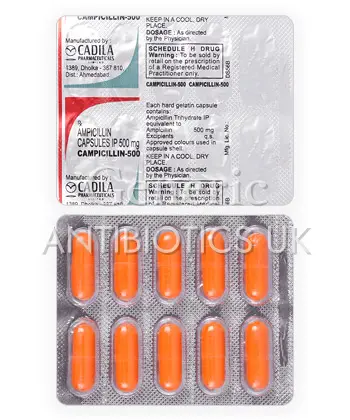
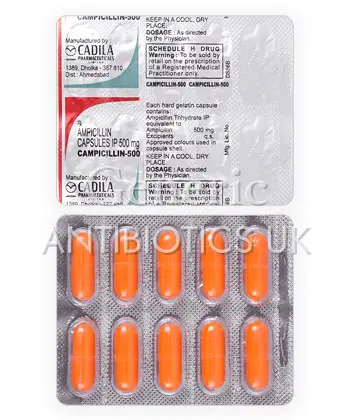
Ampicillin is a penicillin-type antibiotic used to treat infections caused by certain bacteria. It works by interfering with the bacteria's ability to build their cell wall, which helps stop their growth. It comes in several forms, including capsules, a liquid suspension for children, and injectable preparations used in clinical settings.
Online pharmacies list Ampicillin with clear dosing ranges and patient instructions. The product label emphasizes to use only as prescribed and to complete the full course, even if symptoms improve. Resistance can reduce effectiveness, so proper use matters.
Ampicillin binds to penicillin binding proteins, blocking the cross-linking of peptidoglycan in the bacterial cell wall. This weakens the wall and allows natural defenses to eliminate the organism. The result is slowed growth or bacterial death, depending on the dose and organism.
Ampicillin is commonly used for respiratory and ear infections, certain urinary tract infections, skin infections, and some digestive system infections. It is also used to prevent infections in certain surgical procedures. The specific dose depends on age, weight, and infection severity.
Not all bacteria are susceptible. Your pharmacist will confirm whether Ampicillin is appropriate based on culture results or local resistance patterns. For meningitis or severe infections, injectable forms are preferred under medical supervision.
For oral use, take Ampicillin with a full glass of water on an empty stomach unless directed otherwise, though some formulations can be taken with food. The suspension should be well mixed and properly measured with the provided cup or dropper.
Do not skip doses. Keep taking Ampicillin for the full prescribed period even if you feel better. If a dose is missed, take it as soon as you remember unless it's near the next dose; then skip the missed dose and resume normal schedule.
Common side effects include upset stomach, diarrhea, and skin rash. Some people may experience vomiting or vaginal itching. Severe allergic reactions are rare but require immediate medical attention. Stop the medicine and seek help if you develop swelling of the face or throat, severe itching, or trouble breathing.
Serious intestinal inflammation can occur with antibiotics, causing persistent diarrhea. Tell your doctor if you have kidney disease, as this may require dosage adjustments. Prolonged use can also lead to overgrowth of non-susceptible organisms.
Ampicillin can cause allergic reactions, especially in people with a history of penicillin or cephalosporin allergies. Inform your clinician about all medications, including vitamins and herbal products. Certain drugs, such as allopurinol or methotrexate, may interact with Ampicillin and increase risk of adverse effects.
Probenecid can increase penicillin levels by reducing renal clearance. If you are pregnant or breastfeeding, discuss risks with your healthcare provider. Ampicillin passes into breast milk in small amounts.
Store Ampicillin as directed on the label. Oral capsules and liquids should be kept at controlled room temperature away from moisture and heat. The liquid suspension may require refrigeration, and you should discard any unused portion after the stated shelf life.
14–21 days. Free from £150.86 .
5–9 days. £22.63
−10% when paying with cryptocurrency.
−10% on all repeat orders.
All orders are packed in neutral, unbranded boxes with no product name on the outside.